Showing posts with label Unix. Show all posts

Friday, April 17, 2009

Unix Network Programming, Volume 1: The Sockets Networking API, 3/E

http://vig-fp.prenhall.com/coverimage/0131411551.jpg

In this book, the authors offer unprecedented, start-to-finish guidance on making the most of sockets, the de facto standard for UNIX network programming. The authors begin by introducing virtually every basic capability of TCP and UDP sockets, including socket functions and options, I/O multiplexing, and name and address conversions. They present detailed coverage of the Posix.1g standard for sockets and the Posix threads. They also introduce advanced techniques for: establishing IPv4/IPv6 interoperability, implementing non-blocking I/O, routing sockets, broadcasting and multicasting, IP options, multithreading, advanced name and address conversions, UNIX domain protocols, and raw sockets.

Teaches students how to choose among today's leading client/server design approaches, including TCP iterative, concurrent, preforked and prethreaded servers.

The Internet/intranet revolution has dramatically increased the demand for students graduating with a sophisticated understanding of network programming APIs, especially sockets. This book helps students achieve that goal.


Download
Addison_Wesley_-_UNIX_Network_Programming_Volume_1_3rd_Ed.rar

http://rapidshare.com/files/222468823/Addison_Wesley_-_UNIX_Network_Programming_Volume_1_3rd_Ed.rar


Readme
Password default : shytex.com

Thursday, April 16, 2009

UNIX Fault Management: A Guide for System Administrators

UNIX Fault Management: A Guide for System Administrators

Book Info
Designed to help you maximize system integrity and availability on any Unix system-including clusters, monitor systems, disks, networks applications, and databases, with tips for recovery and prevention. Provides quick reference diagnostics and recovery section for systems operators. Softcover. DLC: UNIX (Computer file).

From the Inside Flap
Preface

This book is intended for system administrators and operators who are responsible for maintaining the integrity and availability of mission-critical UNIX systems. The book provides a description of the fault monitoring tools and techniques available for UNIX servers, including systems that are configured as high availability clusters.

This book can therefore be a handy quick reference for an operator trying to troubleshoot a problem in the customer environment, by pointing out where to find key diagnostic messages and describing how to take recovery actions.

A system administrator responsible for the initial configuration and administration of UNIX systems will also find this book useful because it describes the procedures to follow to set up the appropriate levels of system monitoring. The product descriptions can also help in making purchasing decisions as the customer determines the appropriate amount of event monitoring needed in their environment.

An overview of the tasks performed by an operator is provided, with details on how events are received and processed. The remainder of the book focuses on the types of events that can be received, how they are detected, how operators receive event notifications, and how problems can be investigated and recovery performed. The goal is to introduce the necessary tools, but not to show how every possible problem can be solved.

This book provides numerous descriptions of how fault management tools and products can be used to solve a variety of problems. Many of the chapters are focused on specific computer components, such as disks or databases, to be helpful to operators with specific roles. Here is a description of the individual chapters:

Chapter 1, ?nalyzing the Role of System Operators,?describes the tasks performed by a system operator and the evolution of fault management.
Chapter 2, ?numerating Possible Events,?describes the various types of events that are interesting to monitor on a UNIX system.
Chapter 3, ?sing Monitoring Frameworks,?describes monitoring frameworks and the administrative tasks that must be done before they can be used.
Chapter 4, ?onitoring the System,?describes the tools and products used to monitor the UNIX server.
Chapter 5, ?onitoring the Disks,?describes the tools and products used to monitor external disk devices.
Chapter 6, ?onitoring the Network,?provides an overview of the many tools available for detecting problems and events related to the use of the network.
Chapter 7, ?onitoring the Application,?describes methods for monitoring the response times and availability of critical applications.
Chapter 8, ?onitoring the Database,?focuses specifically on tools to detect problems and events related to database usage.
Chapter 9, ?nterprise Management,?discusses the problems with trying to deal with fault management for the large-scale customer enterprise.
Chapter 10, ?NIX Futures,?discusses the future plans of some of the major UNIX system vendors in the area of fault management.
Appendix A, ?tandards,?describes fault management standards that have emerged and how you can benefit from them.

The Glossary contains the important terms used in the book, and their definitions.
Although it is assumed that most customers concerned about fault management will implement high availability solutions, this book does not describe how to create highly available computing environments. Readers needing additional information on high availability may check Hewlett-PackardOs external Web site on high availability (hp/go/ha) or read Clusters for High Availability by Peter Weygant.

In general, this book does not discuss the configuration and installation of the hardware and software components of your UNIX system. You should rely on your vendorsO product manuals for this.

Many of the examples used in this book were created on HP-UX servers. Other UNIX platforms behave similarly, and we note when tools are supported only on certain UNIX platforms.

Download


Password default : shytex.com

UNIX User? Handbook (2nd Edition)

UNIX User? Handbook (2nd Edition)


Back Cover Copy

The in-depth UNIX guide for every end-user: completely updated and full of examples!

* For every key UNIX platform: practical examples, real depth!
* Covers all basic UNIX commands, plus sed, grep, awk, vi, and more
* Complete shell programming coverage?lus NEW programming section covering C/C++, Java(tm), and Internet development
* KornShell, Bash, C Shell, and Shell Programming
* Windows interoperability, in depth: Samba, NFS, Windows 2000 Services for UNIX, and much more

UNIX end-users desperately need an up-to-date reference guide with real depth: one that teaches UNIX commands and doesn? just list them! In UNIX User? Handbook, Second Edition, best-selling UNIX author Marty Poniatowski covers every topic UNIX users need to master?ith exceptional clarity and practical, real-world examples. Part I brings together thorough coverage of virtually every key aspect of day-to-day UNIX operation and end-user administration. Part II presents an in-depth programming reference. Part III covers every leading option for Windows interoperability. You?l find fast, easy answers for all this and more:

* Getting started: login, mail, Internet access, and key UNIX file management commands
* All basic UNIX commands and a complete UNIX file system overview (cd, cp, file, ls, mv, pwd, rm, rmdir, cut, paste, split, sort, diff, and more)
* Key UNIX tools?ncluding in-depth coverage of find, vi, find, grep, sed, and awk
* Shells and shell programming: Bash, Korn, and C
* Full programming section?ncluding a NEW user-centered introduction to C/C++ and Java
* End-user administration: processes, startup, shutdown, users/groups, backup, software management, printing, and more
* Networking and Internet protocols
* UNIX/Windows interoperability: Samba, X Window, NFS, Posix, Windows 2000 Services for UNIX, and other alternatives
* Performance and monitoring

This new edition has been updated throughout and redesigned for even faster, easier access to information. Whatever your experience, whatever UNIX version you use, you won? find a more useful reference!

About the Author

MARTY PONIATOWSKI, a technical consultant for Hewlett-Packard in the New York metropolitan area, has worked with UNIX systems since 1981. His best-selling books include HP-UX 11i System Administration Handbook and Toolkit and HP-UX 11.x System Administration ?ow To?Book (Prentice Hall PTR).

Download


Password default : shytex.com

Unix Shell Programming 3rd Edition

Unix Shell Programming 3rd Edition


Product Description
Unix Shell Programming is a tutorial aimed at helping Unix and Linux users get optimal performance out of their operating out of their operating system. It shows them how to take control of their systems and work efficiently by harnessing the power of the shell to solve common problems. The reader learns everything he or she needs to know to customize the way a Unix system responds.

The vast majority of Unix users utilize the Korn shell or some variant of the Bourne shell, such as bash. Three are covered in the third edition of Unix Shell Programming. It begins with a generalized tutorial of Unix and tools and then moves into detailed coverage of shell programming.

Topics covered include: regular expressions, the kernel and the utilities, command files, parameters, manipulating text filters, understanding and debugging shell scripts, creating and utilizing variables, tools, processes, and customizing the shell.


Download


Password default : shytex.com

Wednesday, April 15, 2009

BSD UNIX Toolbox: 1000+

BSD UNIX Toolbox: 1000+


Explore a ton of powerful BSD UNIX commands This handy, compact guide teaches you to use BSD UNIX systems as the experts do: from the command line. Try out more than 1,000 commands to find and get software, monitor system health and security, and access network resources. Apply the skills you learn from this book to use and administer servers and desktops running FreeBSD, OpenBSD, NetBSD, or any other BSD flavor.

Expand your BSD UNIX expertise in these and other areas:

- Using the shell
- Finding online software
- Working with files
- Playing with music and images
- Administering file systems
- Backing up data
- Checking and managing running processes
- Accessing network resources
- Handling remote system administration
- Locking down security

309 Pages | PDF | 2.6 Mb


Download


Password default : shytex.com

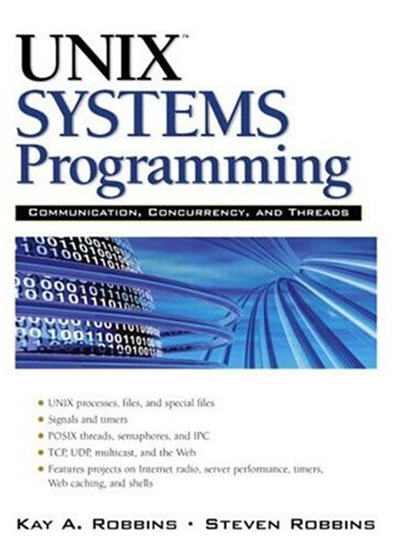
UNIX Systems Programming: Communication, Concurrency and Threads (2nd Edition)

UNIX Systems Programming: Communication, Concurrency and Threads (2nd Edition)


Book Description
Well written and comprehensive, this book explains complicated topics such as signals and concurrency in a simple, easy-to-understand manner. The book offers an abundance of practical examples and exercises. This book is comparable to other best-selling UNIX books, such as UNIX Network Programming, by Richard Stevens. Covers fundamentals, asynchronous events, concurrency, and communication. For programmers in need of a better understanding of UNIX systems programming. --This text refers to an out of print or unavailable edition of this title.

The publisher, Prentice-Hall ECS Professional
Well written and comprehensive, this book explains complicated topics such as signals and concurrency in a simple, easy-to-understand manner. The book offers an abundance of practical examples and exercises. This book is comparable to other best-selling UNIX books, such as UNIX Network Programming, by Richard Stevens. Covers fundamentals, asynchronous events, concurrency, and communication. --This text refers to an out of print or unavailable edition of this title.

From the Back Cover
UNIX Systems Programming: Communication, Concurrency, and Threads by Kay A. Robbins and Steven Robbins

UNIX processes, files, and special files
Signals and timers
POSIX threads, semaphores, and IPC
TCP, UDP, multicast, and the Web
Features projects on Internet radio, server performance, timers, web caching, and shells
Learn how to design and implement reliable UNIX software whether you are using Linux, Solaris, Mac OS X, or another POSIX-based system.

This completely updated classic (originally titled Practical UNIX Programming) demonstrates how to design complex software to get the most from the UNIX operating system. UNIX Systems Programming provides a clear and easy-to-understand introduction to the essentials of UNIX programming. Starting with short code snippets that illustrate how to use system calls, Robbins and Robbins move quickly to hands-on projects that help readers expand their skill levels.

This practical guide thoroughly explores communication, concurrency,and multithreading. Known for its comprehensive and lucid explanationsof complicated topics such as signals and concurrency, the bookfeatures practical examples, exercises, reusable code, and simplifiedlibraries for use in network communication applications.

A self-contained reference that relies on the latest UNIX standards,UNIX Systems Programming provides thorough coverage of files, signals,semaphores, POSIX threads, and client-server communication. Thisedition features all-new chapters on the Web, UDP, and serverperformance. The sample material has been tested extensively in theclassroom.


Download


Password default : shytex.com

Tuesday, April 14, 2009

Special Edition Using Linux (4th Edition)


Product Description
Linux is a significant force in the server room and the desktop, delivering reliability, ease of installation and administration, high performance, security, and robust applications. Special Edition Using Linux 6E is written to the just-released 2.4.x kernel and includes the following topics: installation and configuration of Red Hat Linux, Caldera OpenLinux, and Debian GNU/Linux; configuration and use of Samba, Netscape, sendmail, SSH, and Webmin; coverage of KDE 2.0 and its integrated utility suite; configuration of the X Windows System; installation and managment of applications; creation of a VPN with FreeS/WAN; customization of your shell environment; networking with Linux; Novell NetWare integration; and more. Special Edition Using Linux 6E details the latest Linux technologies, such as Ximian GNOME and the 2.4 kernel.

About the Author
David Bandel has worked on a variety of systems and architectures, including Sparc Colaris, HP-UX, AIX, and SCO OpenServer. In 1993 he began dabbling in Linux, a hobby that quickly grew on him. Currently, David writes and does Linux/Unix consulting. He co-authored Que�s Special Edition Using OpenLinux. Robert Napier has been playing in and around Linux since 1995. His current project is keeping up with KDE2 development. Professionally, he has developed software and supported various Unix-like systems. He currently spends most of his time supporting Perl and writing RTP scripts for Cisco. Rob co-authored Que�s Special Edition Using Linux, Fifth Edition.
Download


Password default : shytex.com

UNIX Hints and Hacks - Yesterday, 08:39 PM


Book Description
UNIX Hints & Hacks is designed to instantly reward you through increased productivity and satisfaction with UNIX. Each and every hint and/or hack provides real value�not just a list of obvious procedures marked as secrets. Learn UNIX administration skills you can apply daily with UNIX workstations and servers. Discover networking tricks to make modifications safely over the network. Tackle security issues such as dealing with SuperUser accounts, permissions, and vulnerabilities in the UNIX operating system. Develop various ways to monitor the system logs and load averages, to aid in the tuning, fixing, and security. Also learn to add, manipulate, and modify user accounts in new ways, and improve your file management skills for modifying, viewing, and executin. With UNIX Hints & Hacks you�ll look up from the reading and say, �I can�t wait to try that!�

Amazon.com
Unix Hints & Hacks covers the science and art of Unix system administration comprehensively. While its title implies that this is a how-to recipe book for running and maintaining Unix machines�and you will find a lot of shell trickery detailed here�there�s much more to this book than commands and procedures. Much of Unix Hints & Hacks contains explicit solutions to problems that pop up on Unix machines. (Waingrow covers AT&T- and BSD-derivative kernels, along with several shells.) For each of the scores of situations he covers, such as those in sections like �Moving and Renaming Groups of Files� and �Troubleshooting ASCII Terminals,� Waingrow presents a handful of solutions and explains scenarios in which each works best. Where appropriate, he provides listings of command shell scripts and explains how they work. Coverage includes user administration, file management, networking, resource monitoring, and security.
On top of his technical coverage, Waingrow includes generally ignored insights that concern the human side of administering systems. He offers advice on working with users who are experiencing trouble, suggestions for getting approval from managers for the equipment you want, and hints for developing healthy relationships with vendors� representatives.
He also presents his thoughts on applying for employment as a Unix administrator. You�ll find hints on preparing a resume that adequately represents your skill set, and the book gives you a feel for the kinds of technical stumpers you might be asked in an interview. �David Wall
About the Author
Kirk Waingrow currently runs the largest Unix resource on the Internet � The Unix Guru Universe (ugu). Over the last 4 years, Kirk has worked with over 17,000 unix administrators �learning what their needs and wants in resource material is. This book is put together from data Kirk compiled over the years that typically isn�t available to the average Unix Administrator. Recently, Kirk installed a 1.5 Terabyte server system for Disney.
Download


Password default : shytex.com

Monday, March 2, 2009

UNIX Network Programming

W.Richard Stevens, ?NIX Network Programming?lt;/strong>
Publisher: Prentice Hall PTR | 2003-02-07 | ISBN 013490012X | PDF | 1009 pages | 3.3 MB

The classic programming text Unix Network Programming has been updated by author W. Richard Stevens to encompass three new volumes. There have been a few changes in the computing world since 1990 (the year the original was published), and Stevens has taken the opportunity to create a complete set of reference manuals for programmers of all skill levels.

The first volume, Networking APIs: Sockets and XTI, covers everything you need to know to make your programs communicate over networks. Stevens covers everything from writing your programs to be compatible with both Internet Protocol version 4 (IPv4) and IPv6, to raw sockets, routing sockets, User Datagram Protocol (UDP), broadcasting/multicasting, routing sockets, server internals, and more, plus a section covering Posix threads.
Stevens also notes compatibility issues with different operating systems so that readers can create code that is more portable, and he offers plenty of advice on how to make code more robust.

Uploading.com

Depositfiles.com

Uploadbox.com


http://rapidshare.com/files/195342948/readme.zip

Password default : shytex.com

Saturday, January 17, 2009

A.Practical.Guide.to.UNIX.for.Mac.OS.X.Users


The Most Useful UNIX Guide for Mac OS X Users Ever, with Hundreds of High-Quality Examples!
Beneath Mac OS� X??s stunning graphical user interface (GUI) is the most powerful operating system ever created: UNIX�. With unmatched clarity and insight, this book explains UNIX for the Mac OS X user??giving you total control over your system, so you can get more done, faster. Building on Mark Sobell??s highly praised A Practical Guide to the UNIX System, it delivers comprehensive guidance on the UNIX command line tools every user, administrator, and developer needs to master??together with the world??s best day-to-day UNIX reference.

This book is packed with hundreds of high-quality examples. From networking and system utilities to shells and programming, this is UNIX from the ground up??both the ?�whys?� and the ?�hows?�??for every Mac user. You??ll understand the relationships between GUI tools and their command line counterparts. Need instant answers? Don??t bother with confusing online ?�manual pages?�: rely on this book??s example-rich, quick-access, 236-page command reference!

Download Here

Password default : shytex.com

Unix.for.Mac.Your.visual.blueprint.to.maximizing.the.foundation.of.Mac.OS.X


* Mac OS X combines the Unix power developers need with Mac's ease of use, offering a unique combination of technical elements with enhanced performance, compatibility, and usability
* Shows readers how to use the Terminal application and the command interface, and explores the many Unix applications using step-by-step screen shots
* Readers will learn how to manage, create, edit, and transfer files; configure the Unix environment; navigate permissions, directories and files; run Unix utilities; and configure and run the Apache Web server

DOwnload Here

Password default : shytex.com

Mastering.Unix.Shell.Scripting


Provides readers with end-to-end shell scripts that can be used to automate repetitive tasks and solve real-world system administration problems
Targets the specific command structure for four popular UNIX systems: Solaris, Linux, AIX, and HP-UX
Illustrates dozens of example tasks, presenting the proper command syntax and analyzing the performance gain or loss using various control structure techniques
Web site includes all the shell scripts used in the book

Download Here


Password default : shytex.com

UNIX(R) Shells by Example (4th Edition) (Paperback)


Playing the "shell" game is a lot of fun. This book was written to make your learning experience both fun and profitable. Since the first edition was published, many of you who have been helped by my book have contacted me, telling me that the book made you realize that shell programming doesn't need to be difficult at all! Learning by example makes it easy and fun. In fact, because of such positive feedback, I have been asked by Prentice Hall to produce this fourth edition of UNIX(R) Shells by Example for UNIX and Linux users, programmers, and administrators. Along with updated material throughout, it includes three completely new chapters, with full coverage of the GNU tools for those of you who use Linux. With the meteoric rise of Linux popularity, it seemed like a good time to combine the best of Linux Shells by Example with UNIX(R) Shells by Example and produce a single volume that touches on all the various aspects of the UNIX/Linux shell world. The new chapters include Chapter 2, "Shell Programming QuickStart," an introductory jump-start for programmers who want a quick survey of the shell programming constructs and how they differ; Chapter 15, "Debugging Shell Scripts," which gives you an example of an error message, what caused it, and how to fix it; and Chapter 16, "The System Administrator and the Shell," which demonstrates how the shell is used by system administrators, from system boot-up to shutdown. Writing UNIX(R) Shells by Example was the culmination of 21 years of teaching and developing classes for the various shells and UNIX/Linux utilities most heavily used by shell programmers. The course notes I developed have been used by the University of California, Santa Cruz; the University of California, Davis; Sun Microsystems; Apple Computer; Xilinx; National Semiconductor; LSI Logic; De Anza College; and numerous vendors throughout the world. Depending upon the requirements of my client, I normally teach one shell at a time rather than all of them at once. To accommodate the needs of so many clients, I developed separate materials for each of the respective UNIX/Linux shells and tools. Whether I am teaching "Grep, Sed, and Awk," "Bourne Shell for the System Administrator," "The Interactive Korn Shell," or "Bash Programming," one student always asks, "What book can I get that covers all the shells and the important utilities such as grep, sed, and awk? How does awk differ from gawk? Will this work if I'm using Linux or is this just for Solaris? Should I get the awk book, or should I get a book on grep and sed? Is there one book that really covers it all? I don't want to buy three or four books in order to become a shell programmer." In response, I could recommend a number of excellent books covering these topics separately, and some UNIX and Linux books that attempt to do it all, but the students want one book with everything, and not just a quick survey. They want the tools, regular expressions, all the major shells, quoting rules, a comparison of the shells, exercises, and so forth, all in one book. This is that book . As I wrote it, I thought about how I teach the classes and organized the chapters in the same format. In the shell programming classes, the first topic is always an introduction to what the shell is and how it works. Then we talk about the utilities such as grep , sed , and awk --the most important tools in the shell programmer's toolbox. When learning about the shell, it is presented first as an interactive program where everything can be accomplished at the command line, and then as a programming language where the programming constructs are described and demonstrated in shell scripts. (Since the C and TC shells are almost identical as programming languages, there are separate chapters describing interactive use, but only one chapter discussing programming constructs.) It's one thing to write a script, but yet another to debug it. I have been working with the shells for so long, that I can recognize bugs in a program almost before they happen! But these bugs are hard to find until you get used to the error messages and what they mean. I added a chapter on debugging to help you understand what the often cryptic error messages mean and how to fix them. Since the diagnostics for the shells may differ, each shell is presented with the most common error messages and what caused them. Many students take a shell course as a step toward learning system administration. Susan Barr, a teaching colleague of mine who teaches system administration and shell programming, offered to share her extensive knowledge and write a chapter to describe how the system administrator uses the shell (Chapter 16, "The System Administrator and the Shell"). Having always found that simple examples are easier for quick comprehension, each concept is captured in a small example followed by the output and an explanation of each line of the program. This method has proven to be very popular with those who learned Perl programming from my first book, Perl by Example , or JavaScript from JavaScript(TM) by Example , and with those who learned to write shell programs from UNIX(R) Shells by Example . Another aid to comprehension is that the five shells are discussed in parallel. If, for example, you're working in one shell but want to see how redirection is performed in another shell, you will find a parallel discussion of that topic presented in each of the other shell chapters. It can be a nuisance to shuffle among several books or the man pages when all you want is enough information about a particular command to jog your memory on how a particular command works. To save you time, Appendix A contains a list of useful UNIX and Linux commands, their syntax, and definitions. Examples and explanations are provided for the more robust and often-used commands.The comparison table in Appendix B will help you keep the different shells straight, especially when you port scripts from one shell to another, and serves as a quick syntax check when all you need is a reminder of how the construct works. I think you'll find this book a valuable tutorial and reference. The objective is to explain through example and keep things simple so that you have fun learning and save time. Since the book replicates what I say in my classes, I am confident that you will be a productive shell programmer in a short amount of time. Everything you need is right here at your fingertips. Playing the shell game is fun . . . You'll see!

Download Here


Password default : shytex.com